 Home Page
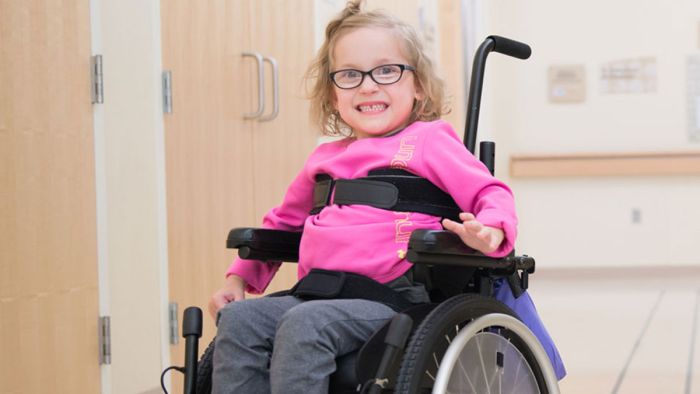
Angela Sinner, DO, has spent her career researching the relationship between developmental delay and cerebral palsy. Not every child with developmental delay has cerebral palsy. So how does Sinner come to a diagnosis? We asked her to share her expertise and explain the important diagnostic tools she uses when a new patient comes to her with motor delay.
In general, there are three tools used to determine whether a cerebral palsy diagnosis is accurate.

The three tools for early detection of cerebral palsy include a neonatal MRI, functional assessments, and the Hammersmith Infant Neurological Exam (HINE).
An experienced team will use a combination of these three methods as well as clinical reasoning to determine if cerebral palsy is an accurate diagnosis for a child’s motor issues. Once diagnosed, Gillette Children’s offers comprehensive treatment options and resources for children from infancy through adulthood and their families.
Learn more from Dr. Sinner Cerebral Palsy Early Interventions: What’s New in Care and Research. Free webinar here.
Join Our Partners in Care Community!
Subscribe to Partners in Care Journal, a newsletter for medical professionals.
Subscribe Today