 Home Page
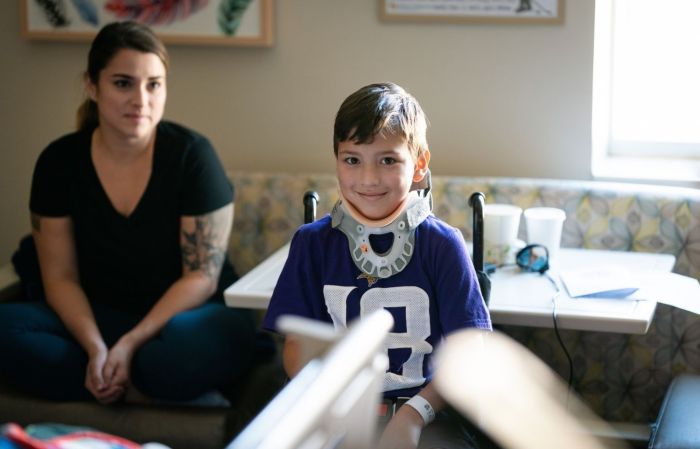
Pediatric patients who sustain an acquired brain injury can experience varying degrees of functional deficits. Inpatient rehabilitation can help.
While a concussion or mild brain injury can often be successfully treated in an outpatient setting, patients who have sustained moderate to severe brain injuries recover best in an inpatient rehabilitation setting, under the care of experts in pediatric physical medicine. An inpatient setting allows for close monitoring of progress and allows changes to be made to treatment recommendations in real time.
Clinical Criteria for Pediatric Inpatient Rehabilitation Referral
Children who have sustained moderate to severe brain injury often have many active accompanying medical issues and may be severely below their baseline level of functioning. They may experience challenges with mobility, communication, and ADLs such as:
- Standing or walking on their own
- Dressing themselves
- Speaking
- Eating
- Swallowing
- Cognition and awareness
Pediatric patients who have difficulty in at least two of the above areas are excellent candidates for an inpatient, pediatric-focused rehabilitation program, and early referral of these patients to qualified experts is essential for optimal outcomes.
Why Early Referral Improves Pediatric Brain Injury Outcomes
Studies have shown that a delay in transferring from acute care to inpatient rehabilitation is inversely correlated with functional improvement. Children with severe impairments admitted to inpatient rehabilitation demonstrate significant improvements in functional independence and cognitive and communication skills.
Pediatric Inpatient Brain Injury Rehabilitation at Gillette Children's
The multidisciplinary therapies available to pediatric patients on Gillette Children’s inpatient rehabilitation unit work with the young brain’s neuroplasticity to restore lost skills and cognitive functioning.
An intensive regimen of physical, occupational, and speech therapies are effective in helping patients recover skills in fine and gross motor function, balance and coordination, memory, visuomotor communication, and executive function. The recovery of these skills helps children recover their independence and resume ADLs following a brain injury.
Our psychologists and psychotherapists offer support with behavior management, adjustment to injury, and impairments in communication, attention, and executive function.
The multidisciplinary rehabilitation team at Gillette Children’s also collaborates with school staff to arrange a smooth transition back to school, including offering support with individualized educational planning, accommodations, and modifications as needed.
Our pediatric rehabilitation medicine providers offer continuing management of medical issues resulting from a brain injury, which may include medications to optimize recovery and function.
How to Refer
To make a referral:
- Phone: 651-400-2525
- Online Referral Form
- Questions? Contact our provider relations liaisons at providerrelations@gillettechildrens.com.
Gillette Children’s rehabilitation experts are committed to working with you throughout your patient’s rehabilitation stay and are available for consultation as your patient continues to recover following discharge.
Join Our Partners in Care Community!
Subscribe to Partners in Care Journal, a newsletter for medical professionals.
Subscribe Today