 Home Page
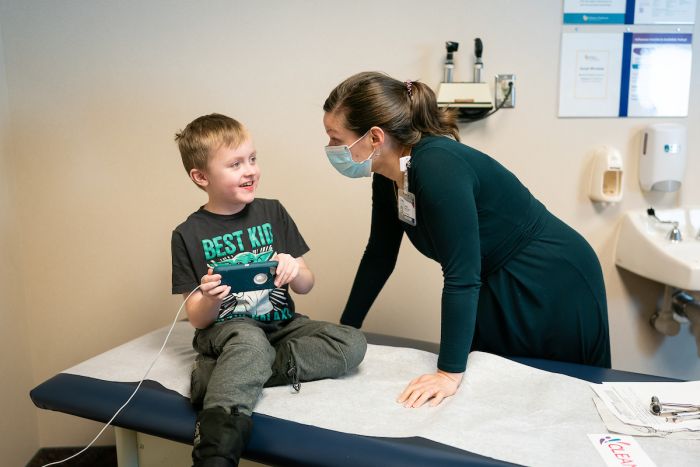
In a landmark decision for rare disease families, U.S. Health Secretary Robert F. Kennedy Jr. announced that Duchenne muscular dystrophy (DMD) and Metachromatic Leukodystrophy (MLD) will be added to the Federal Recommended Uniform Screening Panel (RUSP), the nation’s official list of conditions for newborn screening.
The announcement will help ensure that more newborns across the country will have the option to screen for these devastating chronic childhood conditions, opening the door to earlier diagnosis, treatment and clinical trial opportunities.
“Early detection changes everything,” said Jamie Eskuri, MD, a Gillette Children’s pediatric neurologist who treats children with DMD. “By adding DMD and MLD to the RUSP, families nationwide will finally have access to the same life-saving opportunities that only a handful of states have offered until now.”
DMD is the most common form of muscular dystrophy in children, causing progressive muscle weakness and shortened life expectancy. MLD is a rare genetic disorder that damages the nervous system, often leading to severe disability and early death. The RUSP, overseen by the U.S. Department of Health and Human Services, guides which conditions states screen for at birth. Adding MLD and DMD marks a watershed moment: both conditions are progressive, often fatal and benefit enormously from early detection, Dr. Eskuri says.
For DMD, only three states (Minnesota, Ohio and New York) currently screen newborns, meaning the federal adoption could rapidly expand access and lead to more positive diagnoses and earlier referrals.
