 Home Page

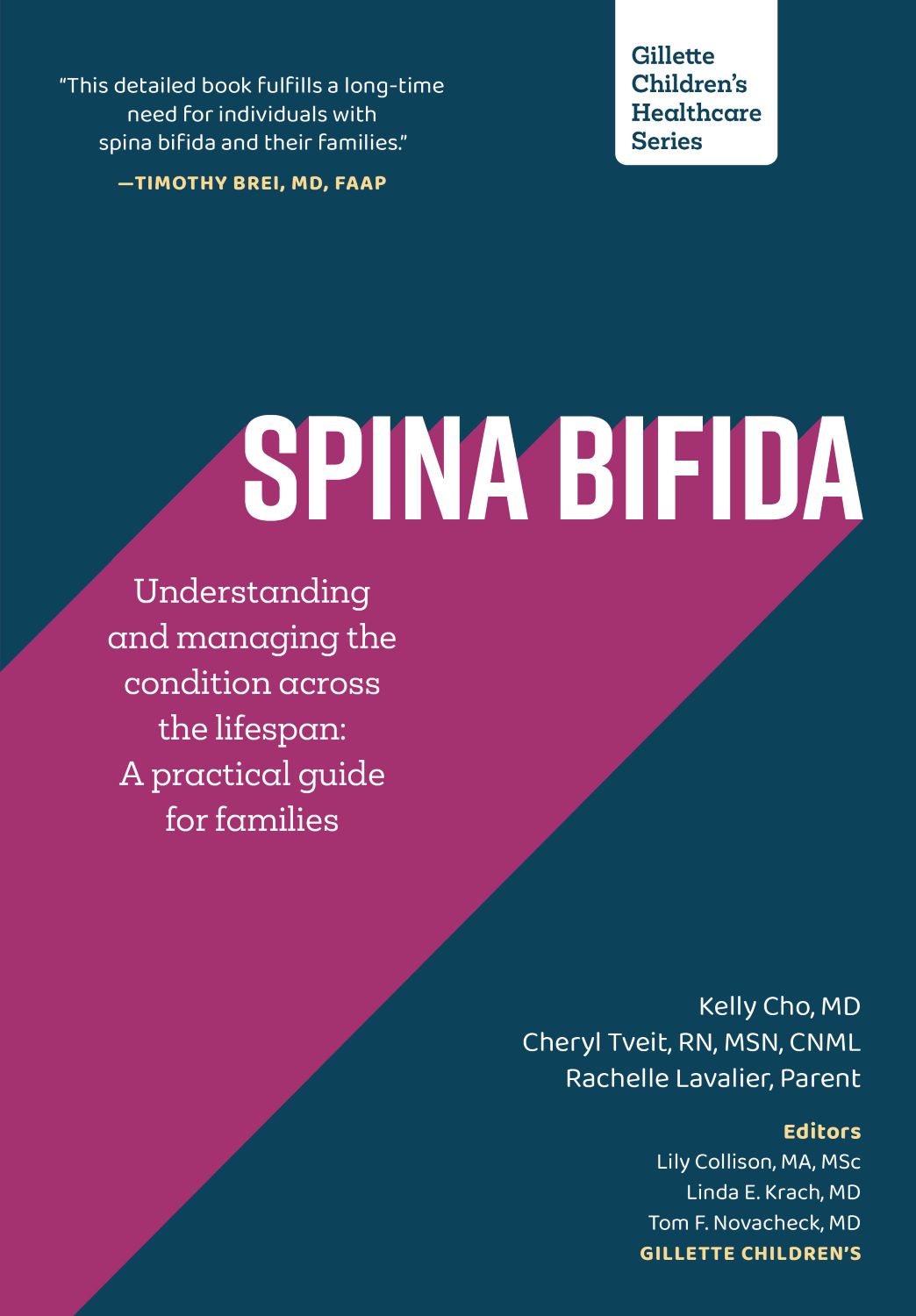
Families facing a spina bifida diagnosis often have questions about what it means and what comes next. A new book from Gillette Children’s Healthcare Press aims to provide clear answers and practical guidance. We spoke with clinician-author Dr. Kelly Cho, pediatric physiatrist and medical director of the pediatric spina bifida program at Gillette Children’s, about how this new resource supports patients, families, and clinicians.

Kelly Cho, MD, is a pediatric physical medicine and rehabilitation physician and the clinician-author of 'Spina Bifida,' a new resource book from Gillette Children's Healthcare Press.
Q: Who is the Spina Bifida book written for?
A: The book is part of the Gillette Children’s Healthcare Series, co-published with Mac Keith Press. The goal of the series is to empower families through greater understanding of childhood-acquired conditions, such as spina bifida. These books are primarily written for patients and families, but healthcare professionals, researchers, educators, and students may also benefit.
What I love about the book is that we’ve highlighted journeys of individuals with spina bifida through their lived experience, and it can also be a resource for clinicians and other medical professionals who manage and treat the condition.
Q: What knowledge gaps about spina bifida does the book address?
A: Through my work with the pediatric to adult healthcare transition initiative at Gillette, one of the things that I hear often is that many youth and young adults with spina bifida want to learn more about what spina bifida actually is and what it means for them. The book addresses the impact of myelomeningocele, which is the most common neural tube defect and primary focus of the book. We include the anatomy and physiology, management of associated conditions from a multi-disciplinary perspective, and evidence-based treatments to support independence and quality of life across the lifespan.
We answer questions like: what is the neural tube and how does it form? What is a myelomeningocele and how does it affect other areas of the body? What is the impact of spina bifida-associated conditions on function? What are supports and treatments to maximize function across the lifespan?
Q: How did your clinical experience shape the book?
A: The experience I’ve gained at Gillette over the last decade—first in my fellowship training, and now as a pediatric physiatrist and medical director of the pediatric spina bifida program—has allowed me to collaborate with other specialists and connect with patients and their families in a way that shapes how we think about and approach care for individuals with spina bifida. We work together towards dreams and goals to empower patients and families to manage their health. We give them a collaborative view of the condition to take advantage of the care we offer and apply it to their day-to-day life.
Q: What specific resources or tools in the book can help families navigate the ongoing treatment, like rehabilitation therapies, that patients who have spina bifida need?
A: For individuals with spina bifida, the US Spina Bifida Association (SBA) is home to resources and guidelines for the care of individuals with spina bifida. Gillette is a SBA clinic care partner, which means we provide care that meets rigorous standards essential to enhance the health and wellness for people with spina bifida. We also cite evidence-based resources and tools that would be helpful to individuals living with spina bifida worldwide. Rehabilitation therapies are an essential support in care, and a physiatrist can be a lifelong partner to minimize challenges and maximize abilities across the lifespan.

A quote from Grace Hadlich—an adult who lives with spina bifida—of the new Spina Bifida book reads: "This book does a phenomenal job of describing all the different ways the condition can affect a person. It also caters to different audiences—people with spina bifida, parents, and those who take care of people with the condition."
Where can I purchase the new Spina Bifida book from Gillette Children's Healthcare Press?
Purchase your copy of Spina Bifida, in print or e-book form, on Amazon or from the Gillette Children's Healthcare Press website.
You can also purchase a copy from our book vending machine on the 4th floor of Gillette Children's St. Paul campus, near Hope Breakfast Bar.
